
Shaklee Distributor in Dallas discusses protein and muscle loss.

Shaklee Distributor in Dallas discusses protein and muscle loss.

Protein has power
It’s imperative for the growth, maintenance and repair of all body tissues. It’s also essential for making enzymes – catalysts to all life processes, and hormones -important chemical messengers that circulate through your bloodstream and target specific cells, where they generate a wide range of biological responses. It also helps your body maintain electrolyte balance and fluid levels, provides a source of energy, and helps your body fight off disease. These are the powers of protein!
These powers are made possible by consuming adequate amounts of dietary protein from a variety of lean meats, fish, and poultry, as well as soy and milk, which supply the body with amino acids, the basic building blocks from which the body can make its own body proteins.

Age-Related Muscle Loss: After about age 40, most adults lose anywhere between 0.5% and 1% of their skeletal muscle mass each year. This gradual loss may go unnoticed because it might be masked by an increase in body fat that happens at this time. However, this chronic muscle loss, known as sarcopenia, is estimated to affect about 30% of people over age 60 and may affect more than 50% of those over age 80. Insufficient protein intake can contribute to  muscle loss and research findings suggest that protein intakes modestly above the present recommended dietary allowance of 0.8 grams per kilogram of body weight will enhance muscle mass in adults who regularly perform resistance exercise.

Protein intake in older adults also appears to have a more beneficial effect when consumed within an hour or so of resistance exercise. Emerging research also suggests that protein may minimize sarcopenia. Findings in older adults suggest that increasing leucine, an amino acid in protein, intake may help restore the protein synthesis response to
protein-containing meals, which has been shown to diminish with age.

Protein intake is difficult because we are often avoiding proteins because of the high fat content in many protein sources.  One way to get more protein into your diet is to use a high quality protein supplement.  But beware of the market-there are many brands out there and they are not all they are cracked up to be.  One brand that uses only non-genetically modified protein sources.  That brand is Shaklee.  Try their energizing soy protein or their meal replacement protein Cinch.  You won’t be disappointed.

Dallas Health Helpers is a Shaklee Distributor in Dallas.  We are dedicated to the health and well-being of all and we advocate the use of safe alternatives.  One should avoid use of drugs and drastic programs that can cause problems now and in the future.  For more information go to our web site at http://HealthHelpers.MyShaklee.com or call 214 770 9596.  Be well, Stay well.
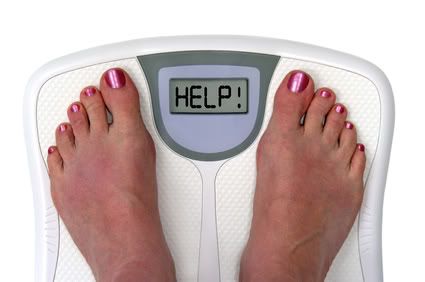
Shaklee Distributor in Dallas looks at micronutrients in popular diets.

Shaklee Distributor in Dallas looks at micronutrients in popular diets.

With two thirds of Americans overweight, it is no wonder that there is a proliferation of diet plans to combat the problem.  Some diets have pitfalls built into them, so we should examine them closely before going on a plan.  One such pitfall is the lack of adequate micronutrients-those vitamins and minerals.   Many diets focus on calorie count, fat counts or protein levels.

Results from the Stanford Prevention Research Center and the Department of Medicine, Stanford University Medical School, Stanford, CA, have shown this inadequate intake in four popular diet plans.

In the study, micronutrient intake was compared between overweight or obese women who were randomly assigned to 4 popular diets that varied primarily in macronutrient distribution-carbohydrates, fats and proteins.

The diets used were Atkins, Zone, LEARN (Lifestyle, Exercise, Attitudes, Relationships, Nutrition), and Ornish. Nutrient intakes were compared between groups at 8 weeks and within groups for 8-week changes in risk of micronutrient inadequacy.

Results: What was found was that differences were observed between groups for all macronutrients and for many micronutrients. Energy intake decreased from baseline in all 4 groups but was similar between groups. At 8 weeks, a significant proportion of individuals in all groups indicated a risk of inadequacy of micronutrients.

Conclusion: Anyone going on a weight-loss diet plan should pay attention to the overall quality of the diet, including the adequacy of micronutrient intakes.

Take a look at a complete, well balanced weight reduction program that focuses on all areas of health while getting the body composition (fat and muscle content) in the right levels.
The program I recommend is Shaklee’s Inch Loss plan called Cinch.

Dallas Health Helpers is a Shaklee Distributor in Dallas.   We are dedicated to the health and well-being of all and we advocate the use of safe alternatives.  One should avoid use of drugs and drastic programs that can cause problems now and in the future.   For more information go to our web site at http://HealthHelpers.MyShaklee.com or call 214.770.9596.  Be well, Stay well.

Shaklee distributor in Dallas talks about male obesity at age 20 and early death.

Shaklee distributor in Dallas talks about male obesity at age 20 and early death.

We know that in the United States, two-thirds of adults are overweight, according to the National Institutes of Health in Bethesda, MD. Half of those are obese. Studies show that being overweight precipitates health problems.  A Swedish study reveals that early death is twice as likely for men who are/were obese at the age of twenty.  This research was presented at the International Congress on Obesity in Stockholm, Sweden.

“Entering adult life as obese leads to a life-long doubling of the risk of dying prematurely,” says researcher Esther Zimmermann, PhD, of the Institute of Preventive Medicine in Copenhagen University Hospital in Denmark.. “The best advice is to avoid beginning adult life as obese [because] if you enter adult life as obese, the majority will remain obese as adults.”

The study watched about 5,500 Swedish men from age 20 to age 80 and learned that the 1,930 men who were obese when they were 20 were twice as likely to die at any given age compared to their counterparts who were not obese at age 20. The obese at 20 group of men, starting at age 55, died an average of eight years earlier than their counterparts who were not obese at age 20.

Their chance of dying prematurely increased by 10% for each body mass index (BMI) unit above 25. BMI takes height and weight into account to measure body fat. When one’s BMI is greater than 25, he is considered overweight. If it is over 30, he is considered obese.

There were follow-up surveys at age 35 and 46. More than 70% of men who were obese at age 20 were still so at the follow-up surveys.  Only 4% of the men who were not obese at 20 later became obese.  The numbers were adjusted for other factors known to affect mortality such as smoking status.

“Entering adult life as obese had a life-long effect on mortality,” Zimmermann says. The next step is to study why those individuals who were obese at age 20 died earlier, she says.

Getting control of one’s weight is of utmost importance.  One plan, the Shaklee Cinch Plan, helped a 23 year old man loose 103 pounds, avoid knee surgery and removed him from the pre-diabetic condition.  Click here to learn more about the plan he used.

Dallas Health Helpers, Shaklee Distributor in Dallas is about being healthy without drugs or synthetics. To learn more about your vitality and health and to discuss weight management that works call 214.871.9596 or email us.

Shaklee Distributor In Dallas talks about the aging process and what can be done to slow it down.

Shaklee Distributor In Dallas talks about the aging process and what can be done to slow it down.

We all want to live a nice long life with vitality and flexibility a part of the aging process.  With the explosion of health technology, we Americans are living longer than before.  In 1950 there were 14 million people aged 80 and above.  That number rose to 102 million in 2009.  And as time goes by, the number of individuals who live to be 100 years old or more continues to increase.  People in this age group are increasingly more engaged, alert fully active members of society.

How does one get to be 80 or more years of age with relatively few disabilities?  What does science tell us that we can do to live longer, healthier lives?

Lifestyle choices play a big part in our longevity.  Experts suggest that only 30% of our lifespan is determined by genetic makeup and 70% is determined by good lifestyle choices.   The major determinants here are one’s activity levels, whether or not he smokes, his alcohol consumption, and whether he is at a healthy weight or not.
Most Americans die from complications associated with  chronic diseases, not an infectious disease or acute illness, which was so years ago.  The CDC reports that 50% of older adults suffer from high blood pressure, high cholesterol, or diabetes.  These put one at risk for coronary heart disease.  These risks can be greatly reduced by simply making modest lifestyle changes.

The goal is to live longer with a high quality of life of good energy and good health. The earlier one adopts healthier lifestyle behaviors the better.  One of the big factors that contributes to high blood pressure, high cholesterol, diabetes and heart disease is being overweight and more so, being obese.
Keeping physically active, getting plenty of rest and eating right are key components of living a longer, healthier life.  Getting one’s weight in a desirable range with a body mass index of 25 or less is of utmost importance.
With a plethora of diets on the market, it is difficult to find the right one.  On a “typical” diet, when 12 pounds are lost, 5 of those pounds are muscle mass. This is not a desirable aspect because muscle burns calories simply by being muscle.  So loosing weight from muscle mass is counter productive.
One weight management plan that has been proven to maintain 100% of muscle mass while loosing weight from fat is the Cinch program.  If you’d like to know more about Cinch post a comment on this article.
Keep your muscle and loose the fat in order to maintain a good healthy lifestyle now and for your future.
Dallas Health Helpers, Shaklee Distributor in Dallas is about being healthy without drugs or synthetics. Call 214.871.9596 or email us to learn more about vitality and health.

Shaklee distributor in Dallas relays the power of protein.

Shaklee distributor in Dallas relays the power of protein.

The essential activities of protein are quite numerous.  Top on the list is the growth, repair and maintenance of all body tissues.  Protein is also required for making enzymes and hormones that eventually generate a wide range of biological functions.  There is also the role of protein in the balance of fluid and electrolytes, providing energy and the defense against disease.  These are the powers of protein.

Consuming adequate amounts of dietary protein in the forms of lean meats, fish and poultry as well as soy and milk make all these important body activities possible.  These proteins supply the body with amino acids, the basic building blocks from which the body can make its own proteins.

The foods we eat provide about 20 different amino acids and more than half of these are considered “nonessential.” That means that the body can produce them for itself.  About nine other amino acids are labeled “essential”, indicating that they are required from the food we eat. While fats and carbohydrates can be stored in the body, amino acids cannot be, so it is imperative that we steadily supply our bodies with protein-rich foods.

There is always the question of which protein sources are the best.  It is true that not all dietary protein is created equal.  The quality of protein in one’s diet will determine how well a child will grow and develop and how well adult health is maintained.  Higher quality proteins provide the raw materials, (amino acids) for the body to do its work while lower quality protein sources do not.

Two factors are used to determine protein quality:  digestibility and amino acid composition.  Digestibility is a measure of the amount of amino acids absorbed from a given protein intake.  Amino acid composition refers to the availability of the needed amino acids from a food we choose to eat.  Animal-sourced proteins (meat, fish, poultry, eggs and dairy) are considered high-quality proteins, as is soy, a vegetable-sourced protein.   Other than soy, vegetable-sourced proteins are referred to as “incomplete” because they lack some of the essential amino acids the body needs.  Incomplete proteins come from fruits, vegetables, grains and nuts.

When on a carefully-watched food program, proper protein intake can be a challenge.  The Shaklee Corporation produces a great lineup of protein supplements that offer the essential amino acids in a low-calorie, high quality form.  Their energizing soy Protein is made from non-GMO (genetically modified organism) soy.  This is very important in the long-term scheme of things.  There are also scientifically-based meal replacements that provide adequate amounts of protein.

Dallas Health Helpers, Shaklee Distributor in Dallas is about being healthy without drugs or synthetics. Call 214.871.9596 or email us to learn more about vitality and health.